
Amazon Direct Fulfillment: What It Is and How It Works
Quick answer: Amazon Direct Fulfillment (DF) is Amazon’s dropship program for vendors (first-party suppliers in Vendor Central). The product is sold by Amazon, but when a customer orders, Amazon sends the purchase order to the vendor, who ships it directly from its own warehouse using an Amazon-paid shipping label. Unlike FBA, inventory never goes to an Amazon fulfillment center.
During the COVID pandemic, e-commerce giant Amazon faced delivery and supply chain delays. Many Amazon vendors find they need to deal with this issue themselves at this point, so they opt for an alternative: Amazon direct fulfillment. And fulfilled the customer’s order perfectly.
So what exactly is Amazon direct fulfillment? Can it be used as a preferred or alternative plan for your business to deal with risk? Stay tuned to this page to find out how much direct fulfillment can bring you in sales.
What is Amazon Direct Fulfillment?
It is a retail drop shipping program for vendors on amazon. Amazon vendors are different from Amazon sellers.
Amazon sellers are independent e-commerce sellers who set up shop on Amazon and sell products wholesaled from different channels. While vendors on amazon directly provide wholesale products to Amazon, and Amazon will mark the products as “Sold by Amazon“.
Simply put, direct fulfillment by Amazon allows vendors on amazon to sell products directly to amazon customers without using Amazon’s fulfillment centers.
Suppose you are an Amazon vendor. When a customer places an order on Amazon, Amazon forwards the order to you who offers the product. Then you send the order directly to the end customer. No longer go through Amazon’s warehouses and logistics in the middle.
At the same time, you will also be responsible for shipping the product to the customer yourself. This means you should have your own warehouse storage and shipping processes.
So what are the benefits for the vendors? Let’s first look at the specific process.
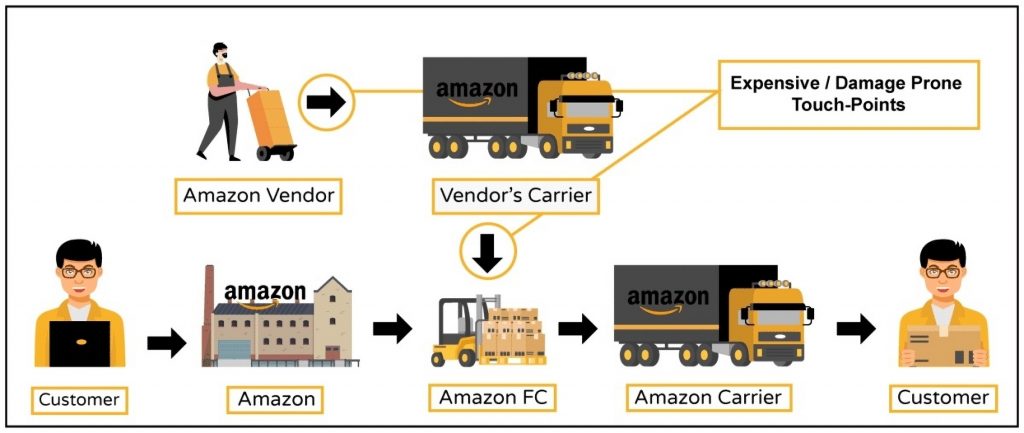
How does Amazon Direct Fulfillment Work?
The buyer checks out and places an order on Amazon.
Amazon sends the same purchase order to the vendors.
Create shipping labels on Amazon and vendors attach them to each product before shipping.
The vendors will package the product directly to the buyer, and the shipping fee will be paid by Amazon.
We can see this process eliminates the need to send the goods to the Amazon warehouse center, which saves this part of the freight. And instead of shipping the goods through Amazon to your customers, you can significantly reduce damaged goods and wrong shipment by yourself.
What are the Pros and Cons of Amazon Direct Fulfillment?
Before you start using amazon direct fulfillment program, take a closer look at its pros and cons.
The Pros of Amazon Direct Fulfillment
Amazon Handles Customer Service
Direct fulfillment amazon gives you access to Amazon’s customer service. This saves the trouble of managing your own customer support team while managing other aspects of the business.
Amazon Pays for your Freight
Amazon is responsible for all shipping costs incurred when you complete your order through direct fulfillment amazon. The only costs for which the supplier is responsible are the cost of performing labor and packaging materials.
Improve Quality Control
When vendors on amazon manage performance, they can decide how to transport items to avoid damage during transportation. This gives the vendors on amazon greater control over product quality and customer experience.
Reduce the Risk of Stock
With vendor direct fulfillment amazon, they don’t spend time and resources transferring inventory from your warehouse or storage facility to Amazon fulfillment centers or distribution centers. Reducing the transportation time will reduce the possibility of your encountering out of stock.
Simplify Transportation
Shipping directly from your warehouse to the customer (instead of shipping to the Amazon factory, and then shipping to the customer) simplifies the transportation process and minimizes the risk of supply chain complexity (such as delays or accidents).
Shows Item Availability Instantly
Amazon extracts inventory from electronic data interchange (EDI) in real time to show buyers that the seller’s items are available for purchase.
The Cons of Amazon Direct Fulfillment
Low visibility in Amazon search
When you search for products you sell on Amazon, the search results will give priority to FBA seller listings, and your ranking may be lowered.
Vendors handle more
Vendors on amazon need to direct fulfillment orders and shipping themselves. This involves a lot of labor and time.
You need to have your own warehouse inventory and shipping procedures. And you have to manage your inventory yourself. This will take a lot of your time and effort. And you still need prepaid shipping. If you ship your products to customers all over the world, you will pay a lot of money.
In the end, this needs to be delivered by the merchant. At the same time, if there is a problem with the procurement or supply chain, you need to deal with customer service yourself. This is time-consuming and may require additional personnel. Increased labor costs.
Amazon Direct Fulfillment and Amazon FBA
Amazon direct fulfillments
Vendor manages their own supply chain.
Vendor management and storage inventory.
Vendor fulfills orders.
Vendor ships, Amazon pays for shipping
Amazon FBA
Merchant sends inventory to Amazon fulfillment centers.
Amazon management and storage inventory.
Amazon fulfills orders.
Amazon ships, the merchant pays for shipping
Amazon Direct Fulfillment and Amazon FBM
FBM (Fulfillment by merchants) refers to Amazon sellers listing their products for sale on Amazon. But the sellers themselves ship the products to each buyer. This means that sellers are responsible for fulfilling their own orders, which Amazon doesn’t handle.
This sounds similar to direct fulfillment, but they are different.
FBM sellers usually sell directly to consumers. But vendors on amazon usually wholesale their products to Amazon.
Both are responsible for fulfilling and shipping orders themselves. But Amazon pays the shipping for direct fulfillment providers, and FBM sellers are responsible for the associated costs themselves.
FBM is more suitable for exclusive products, low-volume products, or products with lower profit margins.
Amazon Direct Fulfillment and Dropshipping
If you’re not sure if direct fulfillment amazon is right for your eCommerce business, you can compare it to other fulfillment options.
Amazon direct fulfillment
You are responsible for shipping products to customers.
You are responsible for customer service.
You must pay the freight in advance.
You need manage your own inventory.
Dropshipping
Third-party suppliers are responsible for delivering products directly to customers.
The supplier is responsible for customer service.
The reliable supplier pays freight.
The supplier is responsible for inventory management.
Direct fulfillment is necessary, but it is important to have a reliable shipping process and contact suppliers. This is also why many direct fulfillment amazon vendors choose to outsource their own shipping to 3PLs.
You don’t have to spend a lot of time and effort. Focus on growing your business.
Save a lot of labor and save more costs.
Third-party logistics providers can provide warehouses and shipments around the world, are faster, and generally cost less than merchants can find on their own. This saves some storage and shipping costs.
When to Choose Amazon Direct Fulfillment?
While direct fulfillment has certain limitations, it cannot match its potential advantages. Fortunately, direct fulfillment by Amazon is an excellent option if you want to reduce your inventory management and order fulfillment costs. Is Amazon direct fulfillment right for you? It depends on the following:
1
Business scale
Suppliers with larger operations stand to benefit the most from direct fulfillment.
Large businesses don’t need to rely on Amazon’s warehousing and shipping services. Fulfillment costs are minimized by shipping directly to customers. There are also no ongoing fees associated with Amazon fulfillment.
2
Continue sales within inventory lead time
Direct fulfillment is a great way for suppliers to keep important revenue streams flowing during periods of fluctuating demand.
E-commerce sales have grown during the pandemic, while Amazon has run out of warehouse space. FBA operations can’t keep up, and the delivery of non-essential FBA items was once stopped. So many Amazon merchants are turning to direct fulfillment.
3
Low disposable capital
In some cases, the direct fulfillment business model allows you to purchase items only after buyers actually place an order. This direct transportation method is very attractive to entrepreneurs. In the case of limited stock funds, entrepreneurs can start a business first.
How To Set Up Amazon Vendor Central Direct Fulfillment
If you are an existing vendor on Amazon:
Submit a support case on your vendor central and request access to Dropship Central and Direct Fulfillment.
If you are not, the registration process is as follows:
When configuring your amazon vendor central account, please notify your company contact to tick the “DF” (“Direct Fulfillment”) box.
During the seller central setup, you will receive an invitation to sign up for dropship central.
You should provide the shipping label (your own or Amazon’s shipping label), your warehouse information, service time, and the carrier’s pickup time.
Within 48 hours, you will receive instructions on how to load the information in the inventory feed into Dropship Central.
Conclusion
Now you should know that Amazon has limited inventory capacity and Amazon direct fulfillment is the best option for your business to avoid losing sales on Amazon when your own warehouse is out of stock. Many vendors on amazon choose to benefit from outsourcing their logistics fulfillment to experts. Now more than ever you need well-run and professional logistics to meet your customers’ needs.
Honest FulPhilment, which provides comprehensive eCommerce fulfillment services. We run our own warehouse in China, work with 18+ overseas 3PL warehouses, and all orders are at your fingertips. Not handling physical objects, not paying for warehouse space, not distributing ordered items, or not managing inventory levels appeals to most Amazon vendors. Please contact us now.


FAQ
What is direct fulfillment?
Direct fulfillment means the supplier ships an order straight to the end customer instead of first sending stock to the retailer's warehouse. The retailer takes the order and passes it to the supplier, who picks, packs and ships it.
What is Amazon Direct Fulfillment?
Amazon Direct Fulfillment (DF) is a dropship program for Amazon Vendor Central vendors. Products are listed as sold by Amazon, but when a customer orders, Amazon sends the purchase order to the vendor, who ships the item directly from its own warehouse using Amazon's shipping labels.
What is the difference between Amazon Direct Fulfillment and FBA?
With FBA, the seller sends inventory to Amazon's fulfillment centers and Amazon picks, packs and ships each order for a fee. With Direct Fulfillment, the vendor keeps the inventory and ships each order itself, while Amazon pays for the shipping label.
Who pays for shipping in Amazon Direct Fulfillment?
Amazon provides the shipping labels and covers the carrier cost. The vendor pays for its own warehouse, labor and packaging materials.
How do I sign up for Amazon Direct Fulfillment?
Existing vendors open a support case in Vendor Central and request access to Direct Fulfillment and Dropship Central. New vendors ask their Amazon contact to enable the DF option when the Vendor Central account is set up.