
How to Start Selling on Etsy: Fees and 6 Simple Steps
Quick answer: To start selling on Etsy, create a free account, open your shop (name, language, country, currency), add product listings with keywords, photos, prices and shipping details, set up payments and billing, then customize your shop and add your policies. Opening a shop is free; Etsy charges $0.20 per listing (valid for four months) plus a transaction fee and payment processing fee on each sale, and optional ads are pay-per-click.
Etsy is one of the largest e-commerce platforms in the world; in 2021 it reported more than 90 million active buyers. It is a potential market for merchants, so opening a store on Etsy can help us increase sales and profits.
This article will introduce you to what Etsy is, the costs of an Etsy store, the advantages of opening a store on Etsy, and how to sell products on Etsy. Through the study of this article, you will learn how to successfully open a store on Etsy and increase sales.
What is Etsy?
Etsy is an e-commerce marketplace based in Brooklyn that sells handmade goods, art, crafts, vintage items and collectibles. Etsy does not produce products; it connects buyers and sellers and provides a platform for them to communicate. For small and medium businesses, Etsy is a place to display their wares.
What are the Costs of Selling on Etsy?
The Etsy fees are not high. Setting up an Etsy account is free, and listing an item costs only $0.20, but once the item is sold, you pay a transaction fee. Etsy includes the following fees:
1
Etsy Store Costs
It’s free to set up a store on Etsy, but there is a fee for listing items, which is $0.20, and a listing can be displayed for four months. A listing can have a quantity of more than one, so you can sell several identical items from the same listing and only pay the listing fee once for that listing.
2
$0.20 Is Not All Costs
$0.20 is the fee for a listing to stay live for four months, but you may not sell all the items in that listing within four months, so at the end of the four months, you need to pay another $0.20 to renew it for the next four months. Each time an item sells and the listing renews, a new listing fee is charged.
3
Transaction Fee
Like many e-commerce platforms, Etsy charges merchants a transaction fee for every item sold. When this article was first written, the fee was 5% of the sale; Etsy raised it to 6.5% in 2022. Payment processing fees are charged separately, so check Etsy’s fees page for the current rates.
4
Etsy Promotion Costs
If you want to stand out among many products and catch consumers’ attention, you may choose to promote products. On Etsy, ads start at $1 per day and use a pay-per-click model. Once the ad is turned on, your listing can appear in more prominent positions in search results.
Why Should you be Selling on Etsy?
Etsy is an e-commerce platform that merchants should consider, because Etsy is not only imaginative and creative but also offers many services:
Free Shipping Guarantee
Etsy asks merchants to add key shipping information to each listing so that delivery times can be accurately estimated. In addition, if your sales volume and margins are good, you can offer free shipping. According to Etsy, sales increase noticeably once free shipping is offered.
Brand Building
Creativity is the hallmark of Etsy. As an Etsy merchant, you should show your own creativity. Etsy gives merchants room for artistic design and innovative ideas, such as unique product names and shop decoration. These creative settings strengthen consumers’ impression of your brand.
Search Engine Optimization
The SEO capability of Etsy is very powerful. When consumers search for products on the website, Etsy’s search can rank your products on the first page, so consumers see them first. Of course, you need to set up your listings well, such as keywords, titles and tags, which affect query matching and ranking.
How To Start Selling On Etsy – 6 Simple Steps
Before opening a store on Etsy, you should create an account first. Creating an account is free. Go to Etsy’s official website Etsy.com and click the “Get Started” button to continue to the next step. During the registration process, fill in your personal information, such as name and email.

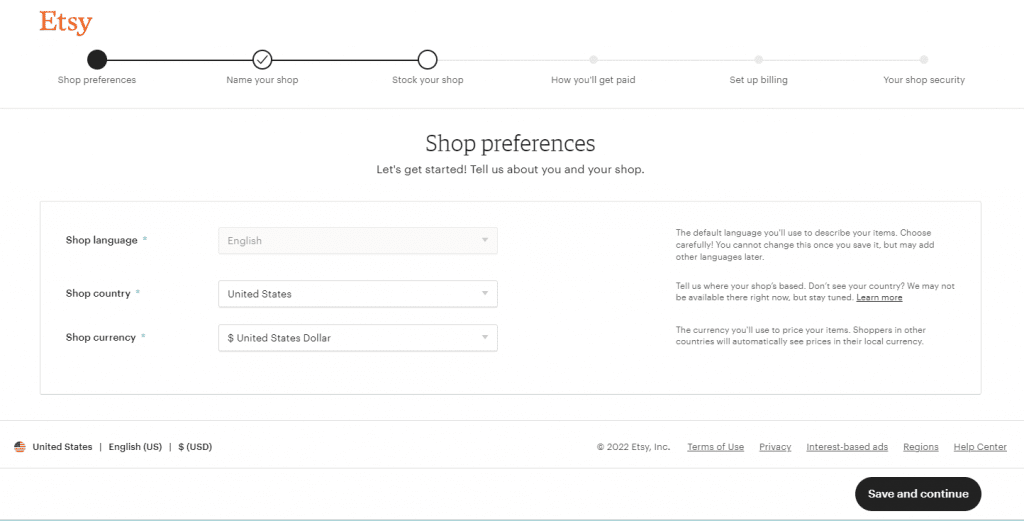
After the account is successfully created, you can start to open the store. First of all, decide the store name and product categories, and be clear about which products you sell in this store. In addition, you must set the language, target country, and currency.
- Product Listings
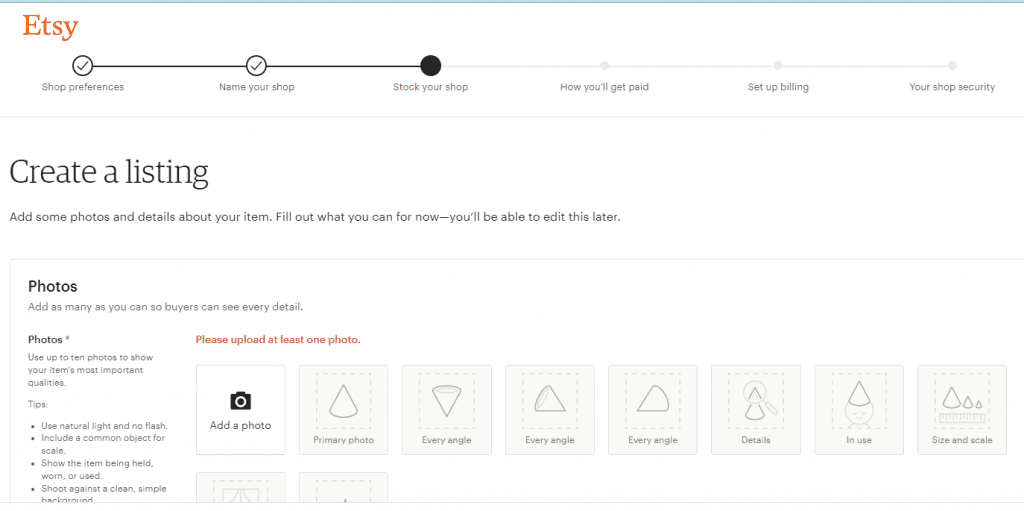
After the store is set up successfully, you can upload products. Uploading products is a very critical step: create different listings for different categories of products. When setting up product listings, include keywords so that they can be easily found by search engines.
- Product Pictures
Since consumers cannot directly touch the material of the product, it is very important to have good-looking pictures. Each product can have up to 10 photos, and only clear, high-quality pictures will win consumers over.
- Shipping Information
When uploading a product, you also need to fill in the shipping information. You need to choose a shipping origin and processing time. Once the customer pays, the merchant can estimate how long it will take for the product to reach the consumer. For international customers, you also need to add a customs (HS) code.
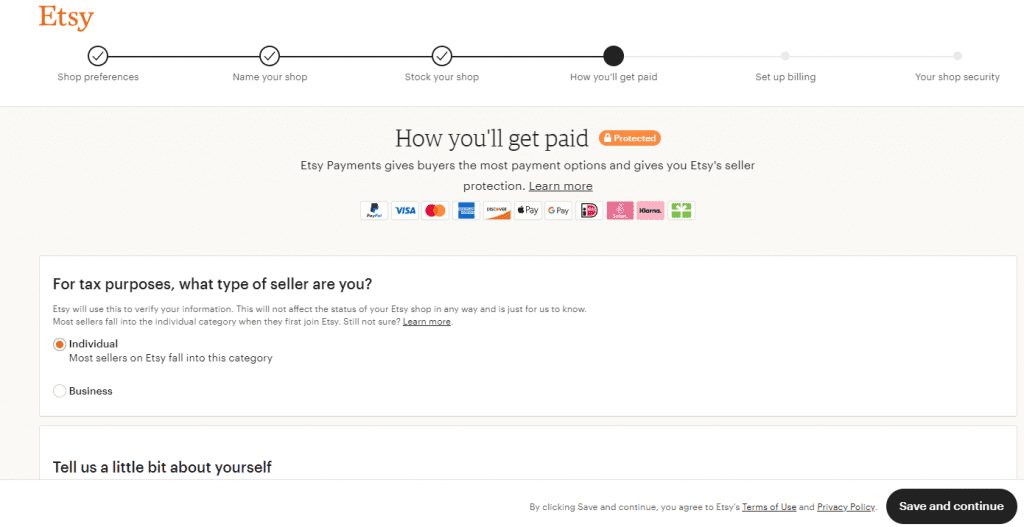
The next step is to set up how you get paid. Here you need to choose whether you are an individual seller or a business seller. Individual sellers enter their name, address, and bank account; business sellers enter the company name, registered address, and company account.
Creating an account is free, but selling products is not. So after you set up how you get paid, Etsy will ask you to add a billing method, which pays for listing and transaction fees.
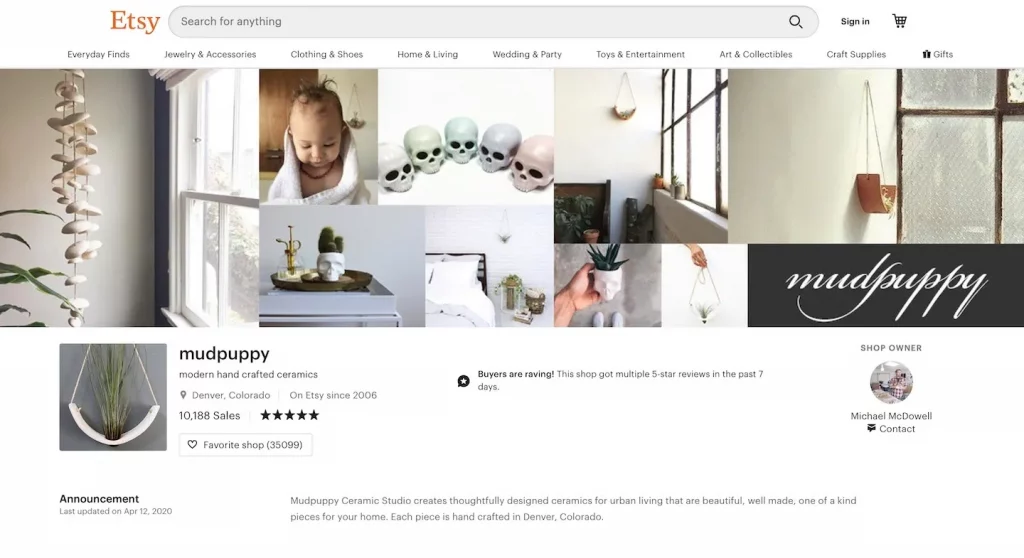
It is important to customize your store. Upload an eye-catching banner that contains products, logos, or promotional information, to make visitors want to stay.
Set the store profile: use a short paragraph to introduce the store, how it was created, which products are sold, and what the advantages of the products are.
Finally, you can upload the store’s policies, such as payment methods, return requirements, exchange procedures, and privacy policies.
Conclusion
Etsy has tens of millions of buyers, and opening a store on Etsy lets you sell items all over the world, so why not get started? Many stores start small, and it is on this small-scale basis that they become bigger and stronger.
If you still have some questions about Etsy, you can choose a professional team or contact Honest FulPhilment for more support. We can help with sourcing, custom packaging and fulfillment for your Etsy store. Visit our website and see more information.


FAQ
How do I start selling on Etsy?
Create a free Etsy account, open your shop and choose a shop name, language, country and currency, then add listings with keywords, photos, prices and shipping details. Finally, set up your payment method and billing, customize your shop banner and profile, and add your shop policies.
How much does it cost to sell on Etsy?
Opening an Etsy shop is free. Each listing costs $0.20 and stays active for four months or until it sells, and Etsy charges a transaction fee plus payment processing on each sale. Optional ads are pay-per-click. Check Etsy's fees page for the current rates in your country.
Is it worth selling on Etsy?
For handmade, vintage, custom and creative products, yes. Etsy brings a large built-in audience of buyers looking for unique items and has strong internal search, so small sellers can get sales without building traffic from scratch.
Can you dropship on Etsy?
Only in a limited way. Etsy items must be handmade, vintage or craft supplies, so reselling ready-made factory products is not allowed. You can work with a production partner, such as a print-on-demand service, for your own designs if you disclose it in the listing.
How can I get more sales on Etsy?
Use the words buyers search for in titles and tags, upload clear high-quality photos, offer free or fast shipping where possible, and build a recognizable brand through your shop banner, profile and packaging.